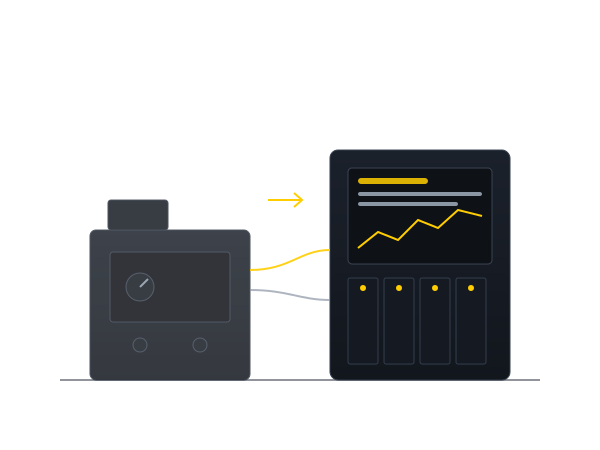
Every plant manager eventually faces the same question about an ageing machine: pour money into it, or write it off? Here's the framework we use with customers.
Start with the mechanics, not the electronics
The expensive, hard-to-replace part of any machine tool is the iron: the castings, ways and spindle that hold tolerance. Controls, drives and wiring are, by comparison, cheap and swappable.
| Component | Typical lifespan | Retrofit cost |
|---|---|---|
| Cast frame & ways | 30+ years | — (reused) |
| Spindle | 10–20 years | Moderate |
| Servo drives | 8–15 years | Low |
| CNC control | 7–12 years | Low–moderate |
If the mechanics still hold spec, you're often looking at 30–50% of replacement cost to make the machine read like new.
The decision checklist
- Do the ways and spindle still hold tolerance?
- Is the machine's geometry right for your current parts?
- Are replacement controls available and documented?
- Is downtime of 2–4 weeks acceptable?
If you checked most of these, retrofit almost always wins.
When to replace instead
Replace when the mechanics are gone: cracked castings, scored ways, or a geometry that no longer matches what you make. No amount of new electronics fixes worn iron.
Not sure which side of the line you're on? Talk to us, and we'll assess the machine before you spend a dirham.